
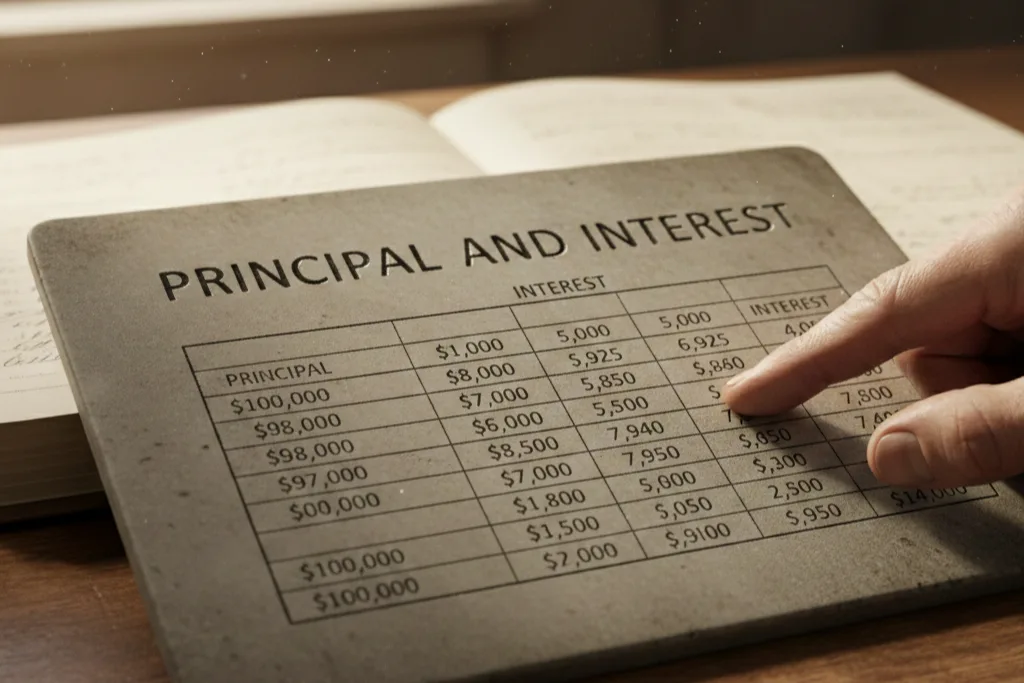
When you take out a home loan, understanding where your hard-earned money goes each month can feel like deciphering a complex puzzle. You make regular repayments, but have you ever wondered what’s actually happening behind the scenes? Let’s break down the mystery of principal and interest repayments and help you understand the true mechanics of your loan.
What Is the Principal of the Loan?
Before diving into repayment structures, it’s essential to understand the two fundamental components that make up your home loan repayments.
The loan principal is simply the actual amount of money you’ve borrowed from your lender. If you’ve taken out a $500,000 home loan, that $500,000 is your principal amount. Think of it as the original debt you owe before any interest charges come into play.
Interest, on the other hand, is the cost your lender charges you for the privilege of borrowing their money. It’s calculated as a percentage of your outstanding financial principal and represents the lender’s profit for providing you with the funds to purchase your property.
Together, these two elements determine your monthly repayment amount and the total cost of your loan over its lifetime.
How Principal and Interest Repayments Work

When you opt for a principal and interest loan structure—the most common type of home loan in Australia—each repayment you make serves a dual purpose. You’re simultaneously paying down the amount you originally borrowed while also covering the interest charges that have accumulated.
Here’s where it gets interesting: in the early years of your loan, the majority of your repayment goes toward interest rather than reducing your principal. This happens because interest is calculated on your outstanding balance, which is highest at the start of your loan term.
As time progresses and you chip away at the principal amount, the interest component of your repayments gradually decreases. This means more of your money goes toward actually owning your home rather than paying borrowing costs. It’s a gradual shift, but one that accelerates as you move through your loan term.
Most lenders structure these loans over a 25 to 30-year term, calculating the minimum repayment needed to fully repay the loan within that timeframe. This ensures you’ll have completely paid off your debt by the end of the agreed period, provided you stick to the schedule.
The Alternative: Interest-Only Repayments
Some borrowers choose a different path: interest-only repayments. During an interest-only period, your repayments cover just the interest charges, leaving the financial principal untouched.
The immediate benefit is obvious—lower monthly repayments. Without the principal component, your cash flow pressure reduces significantly in the short term. However, this comes with important trade-offs that every borrower should carefully consider.
Firstly, because you’re not reducing the principal of the loan, your outstanding balance remains unchanged throughout the interest-only period. You’re essentially making payments without building any ownership equity in your property.
Secondly, once the interest-only period ends (typically after 1-5 years), you’ll need to start repaying both principal and interest. This often means a substantial jump in your monthly repayments, which can strain budgets that haven’t prepared for the increase.
Finally, interest-only loans typically cost more over the life of the loan. Because you’re not reducing your principal early on, you’re paying interest on a larger amount for longer, which adds up significantly over decades.
The Real-World Impact: Comparing Your Options
Let’s paint a picture with actual numbers. Imagine you’ve borrowed $500,000 at a 6% interest rate over 30 years.
With principal and interest repayments from day one, your monthly payment might be around $3,000. Initially, approximately $2,500 goes to interest, and $500 reduces your principal. But fast forward 15 years, and the split changes dramatically—now perhaps $1,800 goes to principal and only $1,200 to interest.
With interest-only repayments for the first five years, your initial monthly payment drops to around $2,500—saving you $500 monthly. Sounds great, right? But here’s the catch: after five years, you still owe the full $500,000, and your repayments jump to around $3,200 monthly to repay the loan within the remaining 25 years.
More importantly, you’ve lost five years of principal reduction and the equity building that comes with it. If property values increase during that time, you benefit less because you haven’t been increasing your ownership stake.
Making the Right Choice for Your Situation
So which repayment structure is right for you? The answer depends entirely on your individual circumstances, financial goals, and risk tolerance.
Principal and interest loans work well for most owner-occupiers who want to build equity steadily, benefit from lower overall interest costs, and enjoy the peace of mind that comes with knowing they’re consistently working toward owning their home outright.
Interest-only structures might suit investors seeking to maximise tax deductions, borrowers expecting significant income increases in the near future, or those who need temporary cash flow relief and have a clear strategy for managing the higher repayments later.
Working with a Finance Broker Australia Can Help
Navigating these choices doesn’t have to be overwhelming. This is where partnering with a professional Finance Broker Australia makes all the difference.
A qualified finance broker can analyse your complete financial picture—your income, expenses, goals, and circumstances—to recommend the loan structure that truly aligns with your needs. They have access to multiple lenders and loan products, allowing them to find options you might never discover on your own.
At Kesh Finance Solutions, we specialise in demystifying the home loan process for Australian borrowers. We take the time to explain exactly how your repayments work, what happens to your money each month, and which strategies can help you pay off your loan faster while maintaining financial flexibility.
The Bottom Line
Understanding principal and interest repayments isn’t just about financial literacy—it’s about taking control of what is likely your largest financial commitment. Every dollar you pay toward your loan principal is a dollar invested in your future security and wealth.
Whether you choose principal and interest from day one or start with interest-only repayments for strategic reasons, the key is making an informed decision based on accurate information and professional guidance.
Your home loan journey is uniquely yours, but you don’t have to navigate it alone. The right knowledge and expert support can make the difference between simply managing debt and strategically building wealth through property ownership.
Ready to understand your loan repayments better or explore your home loan options? Contact Kesh Finance Solutions today for personalised advice from experienced finance professionals who put your interests first.