
If you’re planning to buy a home in Australia, you’ll often hear lenders and brokers talking about LVR. Understanding what LVR is and how it affects your home loan approval, interest rate, and upfront costs is essential—especially for first-home buyers and borrowers with a smaller deposit.
This complete guide explains what is LVR, how it works in a home loan, how to calculate it, and how you can improve your position before applying for a mortgage.
What Is LVR?
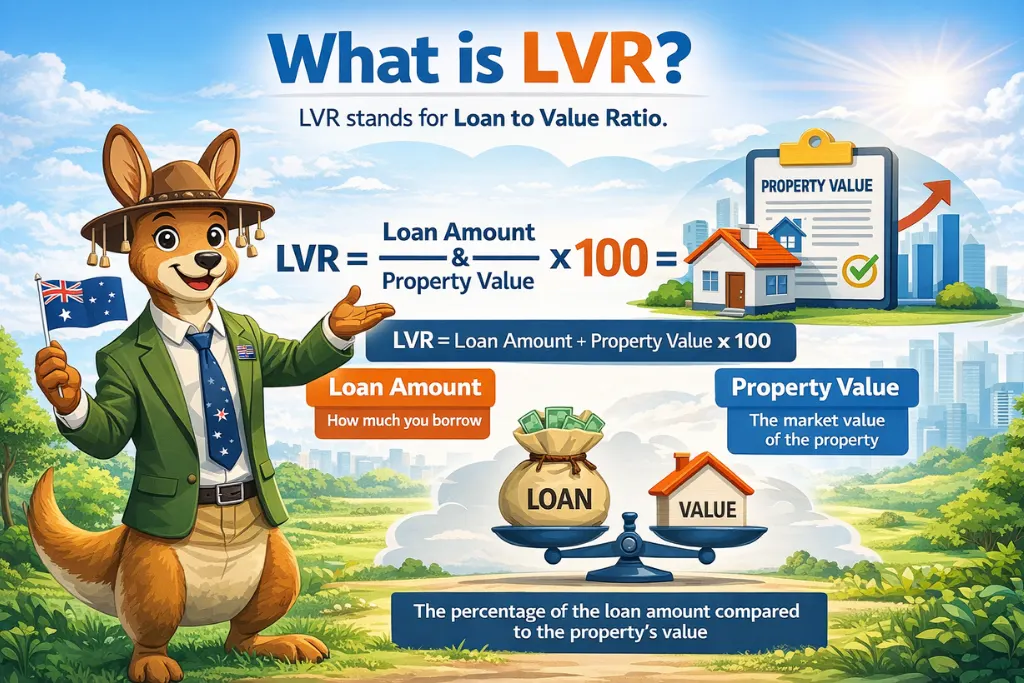
LVR (Loan-to-Value Ratio) is the percentage of a property’s value that you are borrowing from the lender.
In simple terms, it compares:
- The loan amount, and
- The property’s value or purchase price
Lenders use LVR to assess risk. The lender assumes greater risk when the LVR is higher. A lower LVR usually means better loan terms and lower costs.
What Is LVR in a Home Loan?
When applying for a home loan, your lender calculates the LVR to decide:
- Whether your loan will be approved
- If Lenders Mortgage Insurance (LMI) applies
- What interest rate you may be offered
This is why understanding what LVR home loan calculations are and their importance before applying.
How Is LVR Calculated?
The LVR formula is straightforward:
LVR = (Loan Amount ÷ Property Value) × 100
Example:
- Property value: $600,000
- Loan amount: $480,000
LVR is equal to ($480,000 ÷ $600,000) × 100 = 80%.
This means you are borrowing 80% of the property’s value and contributing a 20% deposit.
Why Is LVR Important for Homebuyers?
LVR plays a critical role in how lenders assess your loan application.
1. Loan Approval
Higher LVRs are considered riskier, which can make approval more difficult—especially if you have:
- Bad credit
- Casual or self-employed income
- Limited savings history
2. Interest Rates
Borrowers with lower LVR home loans often receive:
- More competitive interest rates
- Better loan features
3. Lenders Mortgage Insurance (LMI)
If your LVR is above 80%, most lenders require LMI, which protects the lender—not the borrower—if the loan defaults.
What Is a Good LVR?
While each lender has different policies, general guidelines include:
- 80% LVR or below – Ideal, no LMI required
- 80%–90% LVR – LMI usually applies
- Above 90% LVR – Higher risk, limited lender options
- 95% LVR – Possible with strong income and eligibility for government schemes
The lower your LVR, the stronger your application looks to lenders.
LVR and Deposit: How Much Do You Really Need?
Your deposit directly impacts your LVR.
| Deposit Amount | LVR |
| 5% deposit | 95% LVR |
| 10% deposit | 90% LVR |
| 15% deposit | 85% LVR |
| 20% deposit | 80% LVR |
Saving a 20% deposit helps you avoid LMI, but many Australian buyers enter the market with less, especially first-home buyers.
Can You Get a Home Loan with a High LVR?
Yes, it’s possible to secure a high LVR home loan, but conditions may apply.
Options That Can Help:
- First Home Guarantee Scheme
- Using a family guarantor
- Paying LMI
- Strong income and employment history
An experienced broker can help you find lenders that accept higher LVR home loans without excessive costs.
LVR vs LMI: What’s the Difference?
Many borrowers confuse LVR with LMI, but they are not the same.
- LVR is a ratio used to assess risk
- LMI is insurance charged when LVR is high
You don’t pay LMI because it helps you—you pay it because the lender requires protection.
Does LVR Change Over Time?
Yes. Your LVR can improve as:
- You make regular loan repayments
- Your property value increases
- You refinance with additional equity
In the future, a reduced LVR can enable you to:
- Refinance to a better rate
- Remove LMI from future loans
- Access equity for renovations or investments
How to Improve Your LVR Before Applying
If you’re concerned about a high LVR, here are proven strategies:
Save a Larger Deposit
Even a few extra percentage points can significantly reduce LMI.
Buy Below Market Value
A lower purchase price reduces your loan amount and improves LVR.
Use a Guarantor
A family guarantor can reduce your LVR without increasing your cash deposit.
Get Professional Advice
Different lenders calculate risk differently—one lender’s “no” could be another’s “yes”.
Common LVR Myths
Myth 1: You must have a 20% deposit
Not true. Many buyers purchase with 5–10% deposits.
Myth 2: LMI protects you
Incorrect. LMI protects the lender, not the borrower.
Myth 3: All lenders treat LVR the same
Each lender has different LVR limits and risk appetite.
What Is LVR Home Loan Assessment Based On?
When assessing LVR, lenders usually use the lower of:
- The purchase price, or
- The bank’s valuation
This means overpaying for a property can increase your effective LVR.
Final Thoughts: Why Understanding LVR Matters
Knowing what is LVR gives you a major advantage when planning your home purchase. It helps you:
- Budget realistically
- Avoid unnecessary costs
- Strengthen your loan application
- Choose the right lender
A well-planned LVR strategy can save you thousands of dollars over the life of your loan.
Get Expert LVR Advice with Kesh Finance Solutions
At Kesh Finance Solutions, we help Australian homebuyers understand their LVR home loan options, minimise LMI, and secure competitive mortgage solutions—even for those with low deposits or complex financial situations. Whether you’re a first-home buyer, refinancing, or buying after credit challenges, our personalised guidance ensures you choose the right loan structure from day one.
Frequently Asked Questions (FAQ)
1. Can I get a home loan with 95% LVR?
Yes, but only a few lenders allow it, and you’ll almost certainly need to pay LMI.
2. Does LVR affect my interest rate?
Yes. Lower LVR usually = lower rates, because you’re considered lower risk.
3. Is LMI tax-deductible?
For an investment property, LMI may be tax-deductible over a period of five years. For your own home, it’s not.
4. Does my stamp duty count towards LVR?
No. LVR is calculated solely based on the property’s value compared to the loan amount. Stamp duty and other costs are separate.